3 - Artificial Intelligence in Journalism
In the past few years, artificial intelligence has taken the world by storm. From Apple's personal Assistant, Siri, to Google searches, it has become heavily integrated into our technology and digital media. Recently, journalism has also become incorporated with AI. There are numerous ways that news outlets, journalists, and reporters utilize AI in this digital age.




Video Link in Photo.
As seen in the video above, AI can be of great use when it comes to data analysis. It can formulate transcripts, capture data from images, and fact-check information. It can also aid journalists in formatting and summarizing their work. Nevertheless, NBCU Academy stresses the idea that AI "should replace workflow, not people." AI in journalism should always have human moderation making sure that the information being supplied or analyzed is accurate and ethically sourced.
Andrew Briz, the editorial director of newsroom engineering at Politico, has been working towards finding the happy medium between AI and journalism. He has integrated numerous AI technologies into the newsroom, such as language models, AI writing assistants, and, most recently, AI software that summarizes events in real-time. He argues that this allows journalists to "focus on investigation and analysis." This example of AI in journalism shows that it can save time and resources, allowing journalists to prioritize aspects other than outlining events. (University of Florida College of Journalism and Communications)

An example of Politico's summarization AI.
Another example of AI in journalism that often goes unnoticed is algorithm curation. AI is able to personalize your news and social media feed by analyzing what you engage with most often. In an article from Media Helping Media, David Brewer decided to ask an AI tool called Gemini about the impacts of AI-generated algorithms. While AI-generated algorithms can provide content that is interesting to you, it can also lead to algorithm bias. Algorithm bias can contribute to creating an echo chamber by not presenting a fair representation of news and perspectives. This is why human oversight is incredibly important when blending AI and journalism.
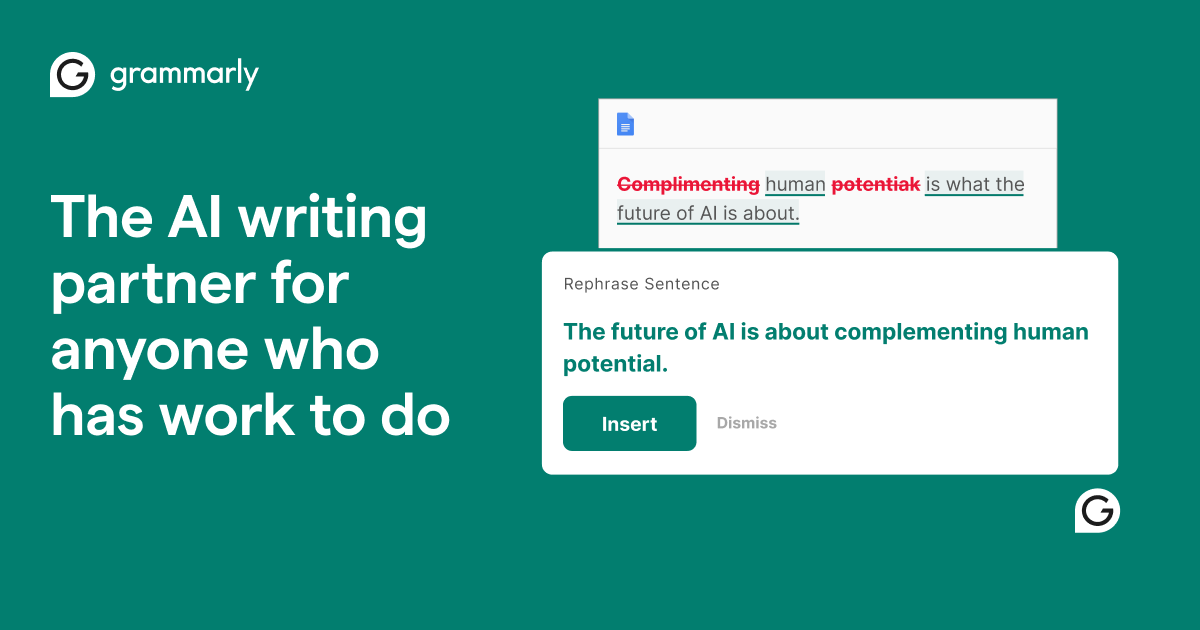
With that being said, AI can be an incredibly useful tool in journalism. Columbia Journalism School outlines that AI has the ability to increase efficiency and productivity in creating news through examples such as dynamic paywalls, transcriptions, and data analysis. Grammarly, an online writing assistant, utilizes AI in its technology to strengthen people's writing. Their AI software is trained to recognize mistakes and clarity issues within your writing, among other things. It is an incredibly useful tool for journalists as it can aid in making your writing more concise and easily digestible.
Link in Photo.
AI can also have a negative impact on journalism. There is uncertainty about the development of AI models and how many aspects of journalism they should be a part of. An article from Time analyzes a Congress hearing from January 2024 where Artificial Intelligence in journalism is the main issue. Experts argued that AI companies such as Google, Meta, and OpenAI are using human-created news content to train their AI models without providing compensation or credit to the content creators. The AI models are then utilized against human journalists by becoming competition for audience engagement and content creation.
In fact, there are now multiple lawsuits being pursued against AI developers. Some examples of entities or people that are suing are The New York Times against OpenAI and Microsoft, comedian Sarah Silverman against OpenAI, and artist Kelly McKernan against multiple image-generating AI models. All of these lawsuits have to do with using human-made resources to train AI models without compensation to the original creators.

A photo from the Congress hearing.
There are also issues about a lack of emotional connection with AI journalism. Journalism, in and of itself, is an emotional form of communication because it is about the people and for the people. There is a certain level of connection that human journalists can reach with their audience that AI models cannot. In the video below, we can see that AI-generated models of news anchors lack human characteristics and movements.
Video Link in Photo.
Whether we like it or not, AI is becoming a huge part of not just journalism, but our lives. Journalists need to establish clear boundaries of how far AI can be taken when creating content. Journalists also need to be protected and given fair credit when their work is used to train AI models. Artificial Intelligence is an incredible tool that we must learn to use wisely to be more efficient, concise, and creative.


Comments
Post a Comment